
Understanding the role of Pilates in rehabilitation
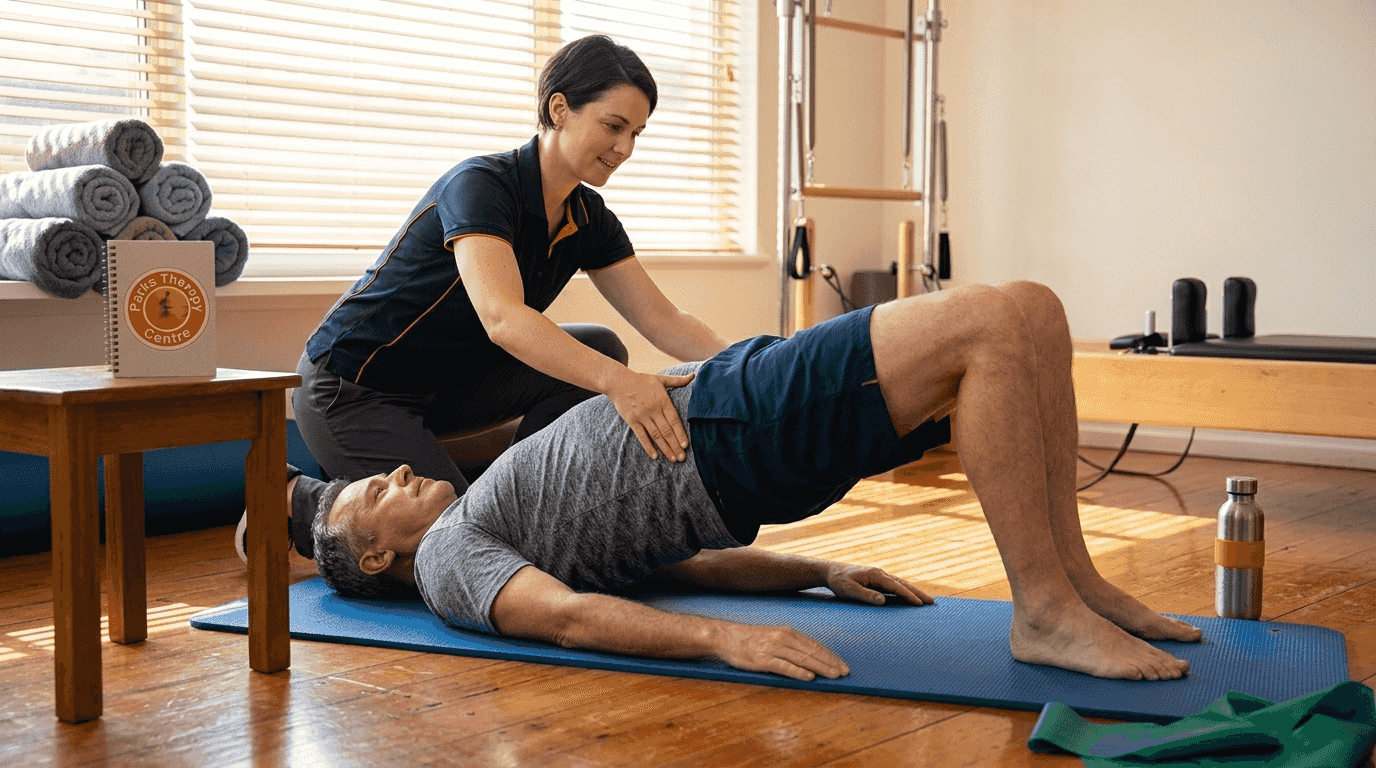
If you’re recovering from a musculoskeletal injury or surgery, you might think Pilates is just another fitness trend. Actually, it’s a scientifically validated rehabilitative tool. Recent research demonstrates that Pilates lessens pain and disability while improving quality of life for people with musculoskeletal conditions. Unlike generic exercise programmes, Pilates targets the deep core muscles that stabilise your spine and limbs during recovery. This guide explains how Pilates supports your body’s healing process, what the evidence really shows, and how to incorporate it safely into your rehabilitation journey.
Table of Contents
Key takeaways
Point | Details |
Pilates reduces pain and disability | Clinical studies confirm significant improvements in musculoskeletal rehabilitation outcomes |
Core stability supports recovery | Deep muscle activation protects healing tissues and prevents re-injury during rehabilitation |
Quality of life improvements | Pilates enhances sleep quality, functional status, and overall wellbeing within weeks |
Safe with minimal risks | Exercise therapy including Pilates shows excellent safety profiles with rare adverse events |
Professional guidance essential | Supervised progression ensures pain-free recovery tailored to your specific injury |
How Pilates aids recovery from musculoskeletal injuries
When you’re recovering from injury, your body needs more than rest. It requires targeted movement that rebuilds strength without compromising healing tissues. Pilates lessens pain and disability and improves quality of life in people with musculoskeletal conditions affecting the extremities. This isn’t just about feeling better temporarily. The improvements are measurable and sustained.
The rehabilitative benefits extend beyond pain reduction. Research shows Pilates improves pain intensity, sleep quality, quality of life, and disability levels in individuals with chronic low back pain after just four weeks. You might struggle with sleep when recovering from injury, and poor sleep disrupts healing. Pilates addresses this cycle by reducing pain and improving functional movement patterns simultaneously.
What makes Pilates particularly effective for rehabilitation is its focus on controlled, precise movements. Therapeutic exercises reduce pain intensity, improve muscle strength, and enhance quality of life across various musculoskeletal conditions. The exercises target core muscles including your abdominal wall, back extensors, and pelvic floor. These muscles create internal support that protects your spine and limbs during daily activities.
Pro Tip: Start with breathing exercises and gentle pelvic tilts before progressing to more challenging movements. Your body needs time to relearn proper muscle activation patterns after injury.
Pilates differs from standard fitness routines because it emphasises quality over quantity. You perform fewer repetitions with complete focus on form and muscle engagement. This approach prevents compensation patterns where stronger muscles take over for injured or weakened areas. Instead, you rebuild balanced strength throughout your entire kinetic chain.
The gradual progression built into Pilates protocols makes it ideal for post-surgical recovery. You begin with fundamental movements that establish core stability, then advance to more complex exercises as your tissues heal. This systematic approach reduces re-injury risk whilst building the strength and mobility you need for daily life. Understanding sports injury prevention principles helps you appreciate how Pilates supports long-term musculoskeletal health beyond immediate rehabilitation.
Understanding Pilates’ focus on core strength and stability
Your core isn’t just your abdominal muscles. It’s a complex system of deep stabilisers that maintain spinal position during movement. The transversus abdominis, multifidus, pelvic floor, and diaphragm work together to create internal pressure that supports your spine. When these muscles function properly, they reduce stress on healing tissues and prevent compensatory movement patterns that lead to further injury.
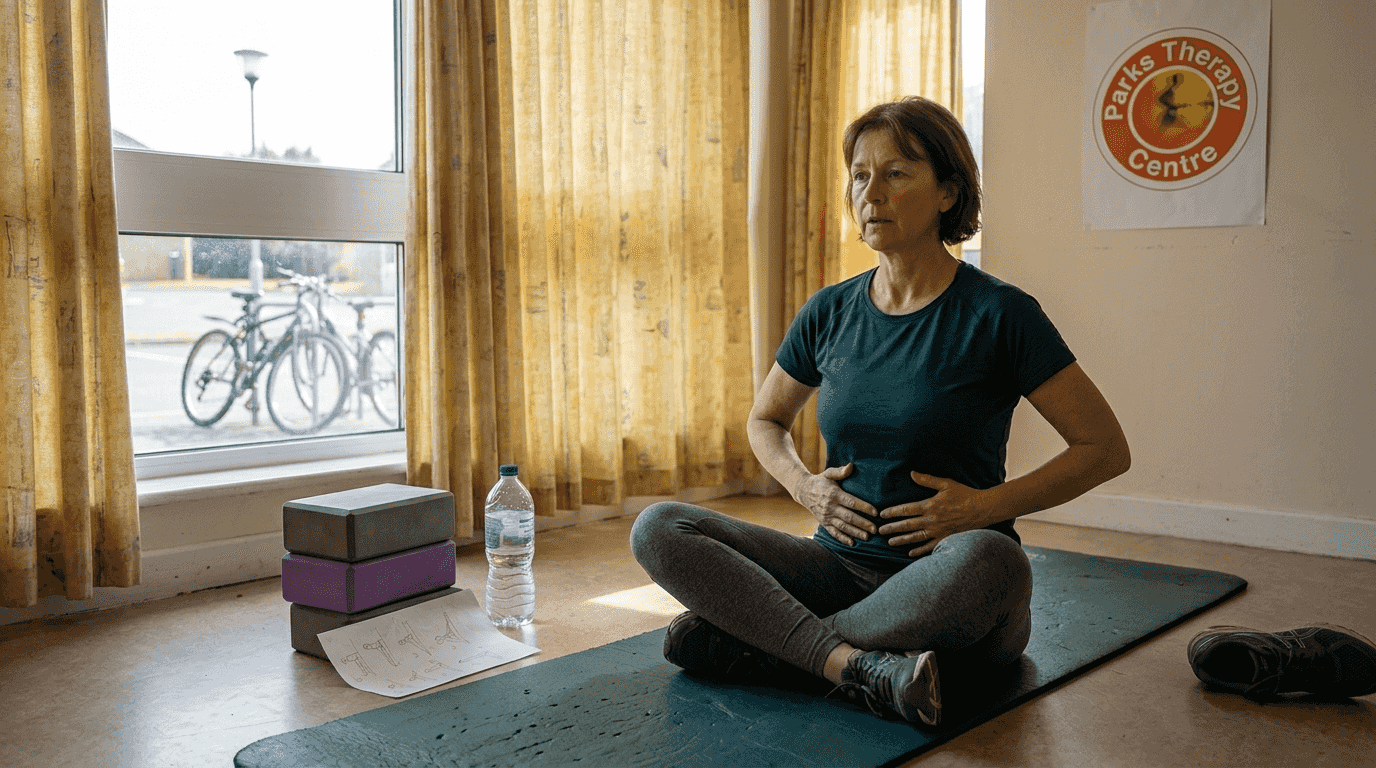
Core resistance training demonstrated significant and stable effects for functional status improvement in adults with chronic nonspecific low back pain. Pilates falls within this category of core-focused interventions. The exercises systematically activate deep stabilisers before adding limb movements or external resistance. This sequencing ensures your body maintains proper alignment throughout each exercise.
Comparing different core training approaches reveals interesting patterns. All three core training modalities demonstrated significant improvements in pain relief compared to controls in adults with chronic nonspecific low back pain. The table below shows how Pilates compares with other core-focused methods:
Training Type | Primary Focus | Pain Relief | Functional Improvement | Best For |
Pilates | Controlled movement with breath | Significant | Most stable long-term | Post-surgical, chronic pain |
Core stability | Static holds, endurance | Significant | Moderate | Acute injuries, prevention |
Core resistance | Progressive loading | Significant | Highest short-term | Athletic rehabilitation |
Pro Tip: Don’t hold your breath during Pilates exercises. Proper breathing maintains intra-abdominal pressure whilst allowing your diaphragm and pelvic floor to function correctly.
The rehabilitation mechanism centres on motor control retraining. After injury or surgery, your nervous system often forgets how to activate stabilising muscles effectively. You might recruit large superficial muscles like your rectus abdominis or hip flexors instead of deeper stabilisers. Clinical Pilates activates the transversus abdominis, multifidus, pelvic floor, and diaphragm to create internal support during movement.
This motor control emphasis explains why Pilates works well alongside other physiotherapy techniques. Manual therapy addresses tissue restrictions and pain, whilst Pilates retrains movement patterns to prevent recurrence. The combination creates comprehensive rehabilitation that addresses both symptoms and underlying dysfunction.
Understanding how to manage sports injury patients effectively involves recognising that core stability underpins all functional movement. Whether you’re recovering from a knee surgery or shoulder injury, your core provides the stable base from which your limbs move. Pilates systematically rebuilds this foundation whilst respecting your body’s healing timeline.
Limitations and holistic benefits of Pilates in rehabilitation
Whilst Pilates offers substantial rehabilitative benefits, it’s important to understand what it does and doesn’t change in your body. Recent research reveals nuanced findings about physiological adaptations. Four weeks of Pilates exercises did not lead to significant changes in muscle viscoelastic properties of lumbar and abdominal muscles. This means muscle tone and stiffness measurements remained relatively stable over the short term.
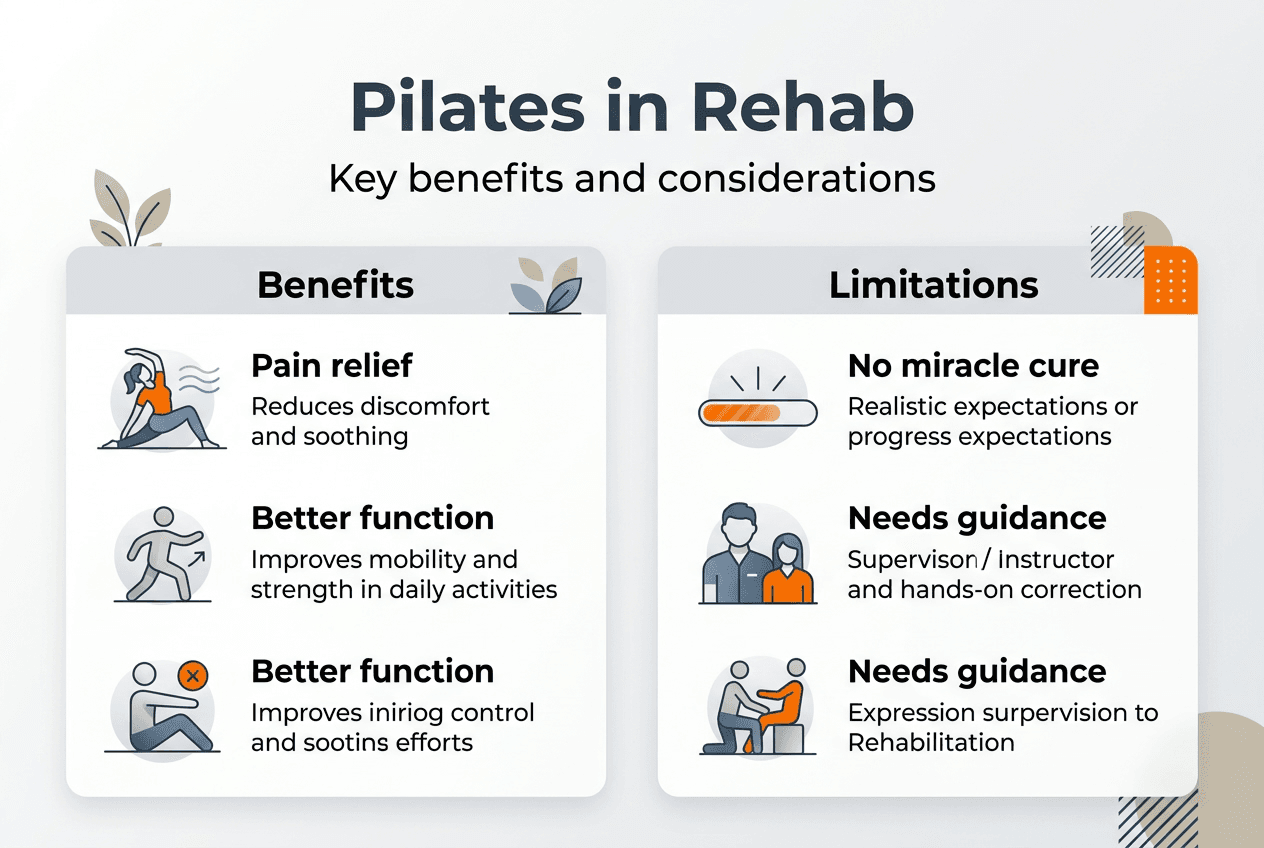
However, the same study found significant improvements in pain intensity, sleep quality, quality of life, and disability levels. This apparent contradiction highlights an important principle: symptomatic improvement doesn’t always correlate with measurable tissue changes. Your nervous system’s pain processing and movement control can improve substantially without detectable alterations in muscle structure.
Interesting body composition changes do occur with consistent practice. Pilates exercises resulted in regional thinning of chest, waist, hip, and thigh circumferences after four weeks, though abdominal measurements remained stable. These anthropometric changes suggest improved muscle tone and postural alignment even when direct muscle property measurements don’t shift dramatically.
Measurement | Change After 4 Weeks | Clinical Significance |
Pain intensity | Significant decrease | Improved daily function |
Sleep quality | Significant improvement | Enhanced recovery capacity |
Muscle stiffness | No significant change | Tissue adaptation takes longer |
Body circumferences | Regional decreases | Postural and tonal improvements |
Disability levels | Significant reduction | Better functional outcomes |
The holistic benefits extend beyond physical measurements. When you’re recovering from injury, psychological factors significantly influence outcomes. Reduced pain and improved sleep create positive feedback loops that enhance motivation and adherence to rehabilitation programmes. You feel capable of movement again, which encourages continued practice and gradual progression.
Exercise therapy’s overall effect size for pain management is modest but meaningful. Exercise therapy and physical activity provide benefits and minimal harms for low back pain management. The key advantage lies in Pilates’ excellent safety profile. Serious adverse events are exceptionally rare, making it a low-risk intervention suitable for most people recovering from musculoskeletal conditions.
Consider these holistic recovery factors:
Pain reduction improves your willingness to move, breaking the fear-avoidance cycle
Better sleep quality enhances tissue healing and reduces inflammatory markers
Improved functional status builds confidence for returning to normal activities
Body awareness developed through Pilates helps you recognise and avoid harmful movement patterns
Social aspects of group classes provide psychological support during recovery
Integrating Pilates thoughtfully within your broader rehabilitation plan optimises outcomes. It works best when combined with appropriate manual therapy, pain management strategies, and psychological support. Preparing for physiotherapy sessions with clear goals and realistic expectations helps you maximise the benefits of each intervention, including Pilates.
Practical tips for safely incorporating Pilates into your rehabilitation
Starting Pilates after injury or surgery requires careful planning and professional guidance. Your body’s healing timeline dictates when and how you can safely begin movement-based rehabilitation. Always consult your physiotherapist, surgeon, or GP before starting any exercise programme post-injury. They understand your specific condition, surgical procedures performed, and tissue healing requirements.
Follow these steps for safe Pilates integration:
Obtain medical clearance from your healthcare provider before beginning
Start with one-to-one sessions with a qualified Pilates instructor experienced in rehabilitation
Focus initially on breathing techniques and gentle pelvic floor activation
Progress to basic core engagement exercises without limb movements
Gradually add controlled limb movements whilst maintaining core stability
Advance to equipment-based exercises only after mastering mat fundamentals
Schedule sessions two to three times weekly with rest days between for recovery
Pro Tip: Keep a simple exercise diary noting which movements feel comfortable and which cause discomfort. This information helps your instructor modify your programme appropriately.
Pain should never be part of your Pilates practice during rehabilitation. Pilates after surgery should not push through pain or rush recovery. Distinguish between muscle fatigue from proper engagement and sharp or aching pain that signals tissue stress. Stop immediately if you experience pain and discuss it with your instructor before continuing.
Understand that Pilates complements rather than replaces other rehabilitation treatments. Your recovery plan might include:
Manual therapy to address joint restrictions and soft tissue tension
Pain management strategies including medication or modalities
Gradual return to daily activities and work duties
Pilates for motor control and core stability retraining
Psychological support for managing recovery-related stress or anxiety
Minor post-exercise soreness occasionally occurs when starting Pilates. Minor adverse events, including post-exercise soreness, occur in less than 31% of reviews, mostly with yoga. This temporary discomfort typically resolves within 24 to 48 hours and shouldn’t prevent you from continuing your programme. However, persistent or worsening pain requires immediate professional assessment.
Your Pilates progression should mirror your overall recovery stages. Early rehabilitation focuses on pain reduction and basic movement restoration. Middle stages emphasise strength building and movement pattern correction. Late rehabilitation prepares you for return to sport, work, or demanding activities. Each stage requires different Pilates exercises and intensity levels.
Consider booking physiotherapy sessions to ensure your Pilates programme integrates properly with your overall rehabilitation plan. Professional guidance helps you avoid common mistakes like progressing too quickly or using incorrect form that reinforces poor movement patterns. Diagnostic imaging referrals can clarify your injury status if you’re unsure whether you’re ready to begin Pilates.
Explore personalised rehabilitation solutions at Parks Therapy Centre
Your recovery journey deserves expert support tailored to your specific needs. Parks Therapy Centre offers comprehensive physiotherapy services that integrate Pilates-based rehabilitation for musculoskeletal conditions. Our qualified therapists create personalised treatment plans combining manual therapy, exercise prescription, and movement retraining to optimise your recovery outcomes.
We provide diagnostic imaging services to accurately assess your injury status and monitor healing progress. Understanding your tissue condition helps us design safe, effective rehabilitation programmes. Our biomechanical assessments identify movement dysfunctions that may have contributed to your injury, allowing us to address root causes rather than just symptoms. Book your physiotherapy session online today to start your evidence-based rehabilitation journey with professional guidance every step of the way.
Role of Pilates in rehabilitation: frequently asked questions
When can I start Pilates after surgery or acute injury?
Timing depends entirely on your specific procedure or injury type. Most surgeons recommend waiting six to twelve weeks post-surgery before beginning gentle Pilates exercises. Acute injuries typically require initial rest and pain management before starting movement-based rehabilitation. Always obtain clearance from your surgeon or physiotherapist before beginning any exercise programme.
How does Pilates differ from standard physiotherapy exercises?
Pilates emphasises controlled, precise movements with focused breathing and core engagement throughout each exercise. Standard physiotherapy exercises might target specific muscle groups or movement patterns without the same emphasis on whole-body integration. Both approaches complement each other effectively within comprehensive rehabilitation programmes. Pilates particularly excels at motor control retraining and postural correction.
Can Pilates help with chronic pain conditions?
Yes, research demonstrates significant benefits for chronic musculoskeletal pain, particularly low back pain. Pilates reduces pain intensity whilst improving functional status and quality of life. The improvements occur through multiple mechanisms including strengthened core stabilisers, improved movement patterns, and reduced fear-avoidance behaviours. Consistency matters more than intensity for chronic pain management.
Will I need special equipment for rehabilitation Pilates?
Initially, you’ll likely work on a mat using your body weight and small props like resistance bands or small balls. As you progress, your instructor might introduce reformer equipment that provides adjustable resistance and support. Equipment-based Pilates offers advantages for certain rehabilitation goals but isn’t necessary for effective recovery. Your therapist will recommend appropriate progressions based on your needs.
How long before I notice improvements in my condition?
Most people experience noticeable pain reduction and improved movement quality within four to six weeks of consistent practice. Functional improvements like better sleep and reduced disability often appear within the first month. Tissue healing and strength gains require longer timeframes, typically three to six months. Individual results vary based on injury severity, adherence, and overall health status.
Recommended